Disney News · Summer 1969
The Mineral King Master Plan
A proposal from 1969. The article below describes plans for a resort that was never built. Opening dates, capacities, and future-tense statements reflect the proposal at the time.
An Alpine Setting
One of the few places in the United States offering uninterrupted ski runs as long as four miles, with a vertical drop of over 3,700 feet.
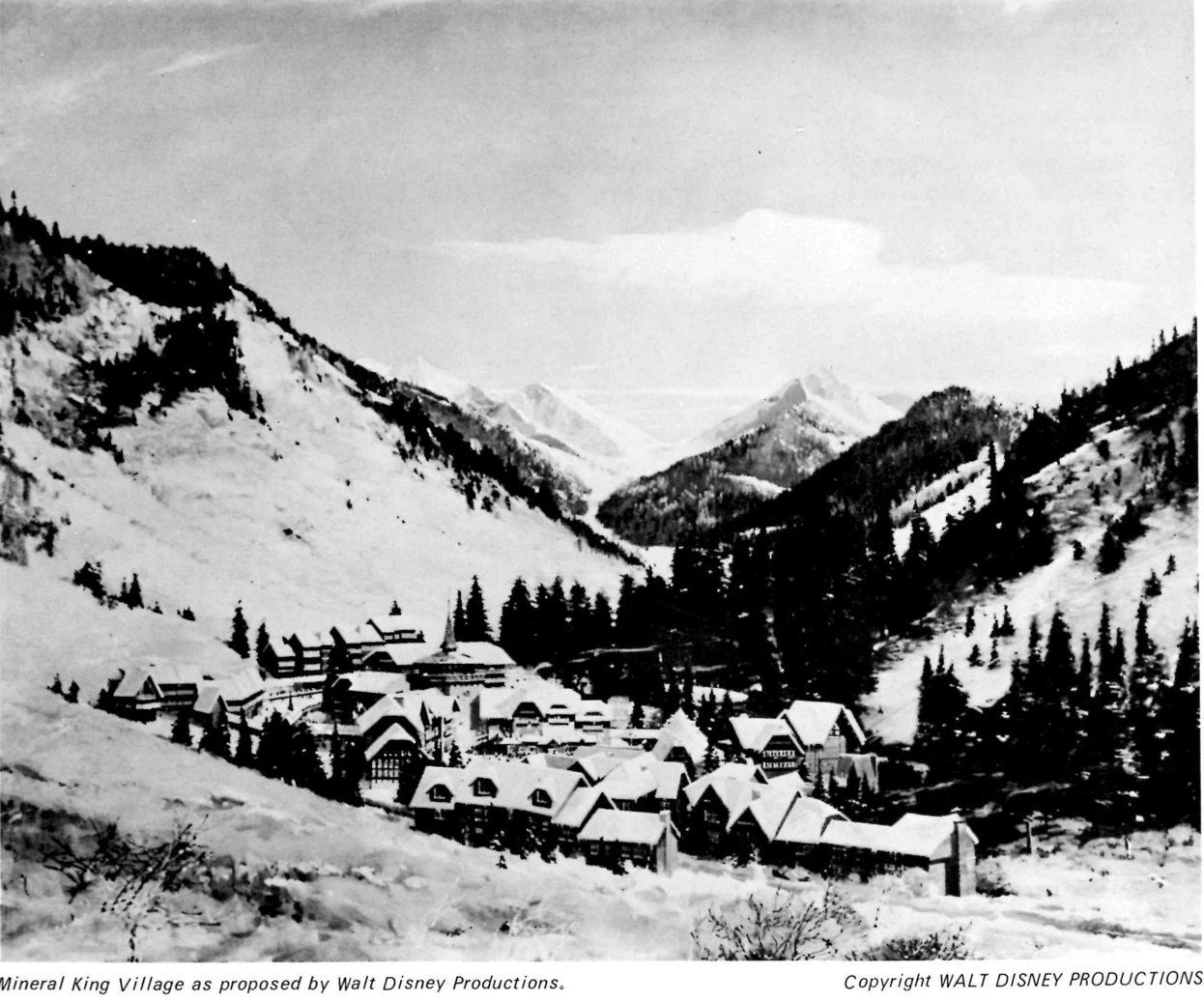
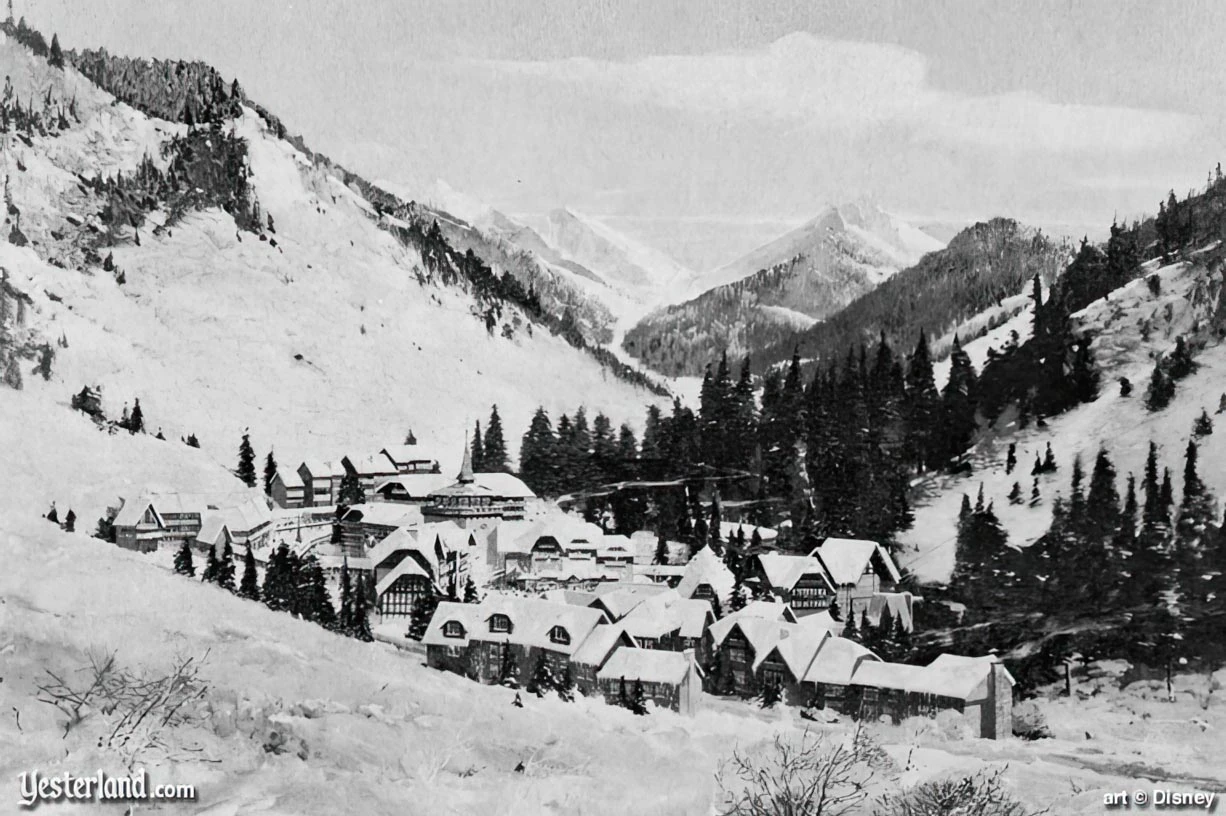
Family recreational facilities for every day in the year, a completely self-contained village nestled in an alpine setting, and a sub-level automobile reception center that keeps cars out of sight and out of the valley are among the highlights of Walt Disney Productions’ Master Plan for the development of Mineral King, California.
The alpine terrain of Mineral King, similar to the European Alps, is located in an area of approximately 20 square miles in the northern portion of Sequoia National Forest, 55 miles east of Visalia, California. Its Valley floor, situated along the headwaters of the East Fork of the Kaweah River, is at an altitude of over 7,800 feet, nearly twice as high as Yosemite Valley and the same altitude as Aspen, Colorado.
Mineral King Valley, approximately two miles long, is surrounded by bold and rugged peaks reaching as high as 12,405 feet in altitude.
"Eight major basins in these mountains offer snow conditions among the most dependable in North America and provide ski terrain equivalent to six Squaw Valleys," said Robert B. Hicks, Mineral King Project Manager for the Disney organization.
"Mineral King is one of the few areas in the United States which offers uninterrupted ski runs as long as four miles, with a vertical drop of over 3,700 feet. Its slopes will accommodate skiers of all levels of competence, from beginner to expert."
 View image +
The American-Alpine Village
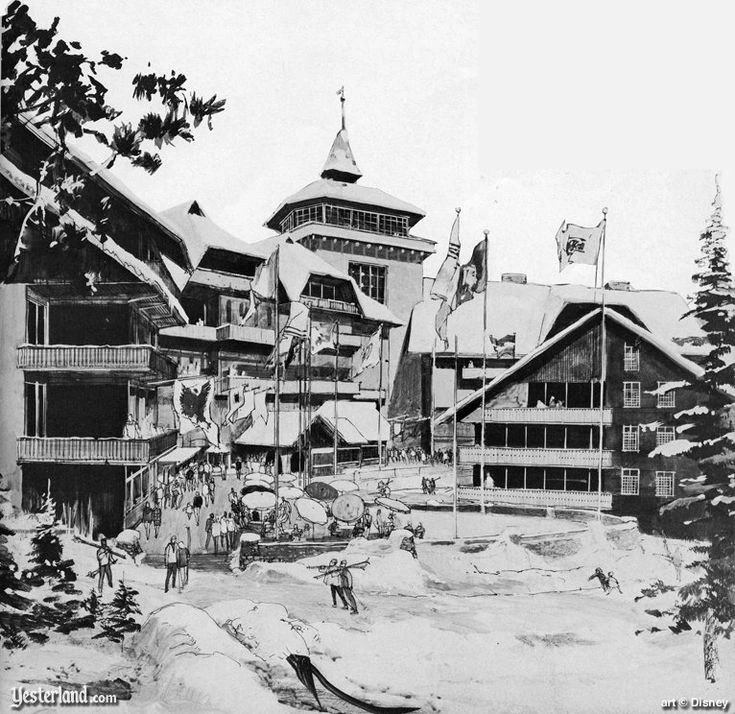
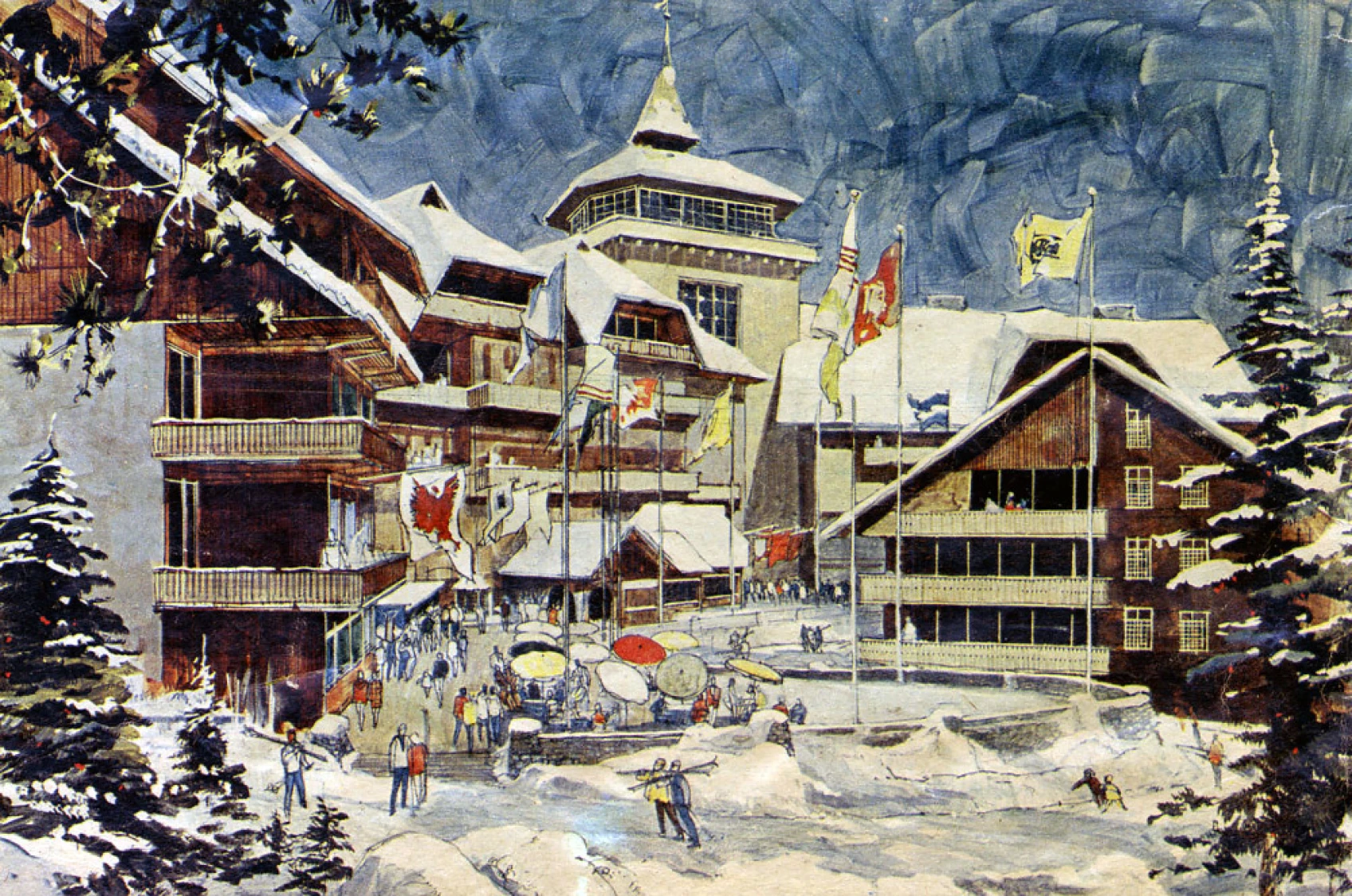
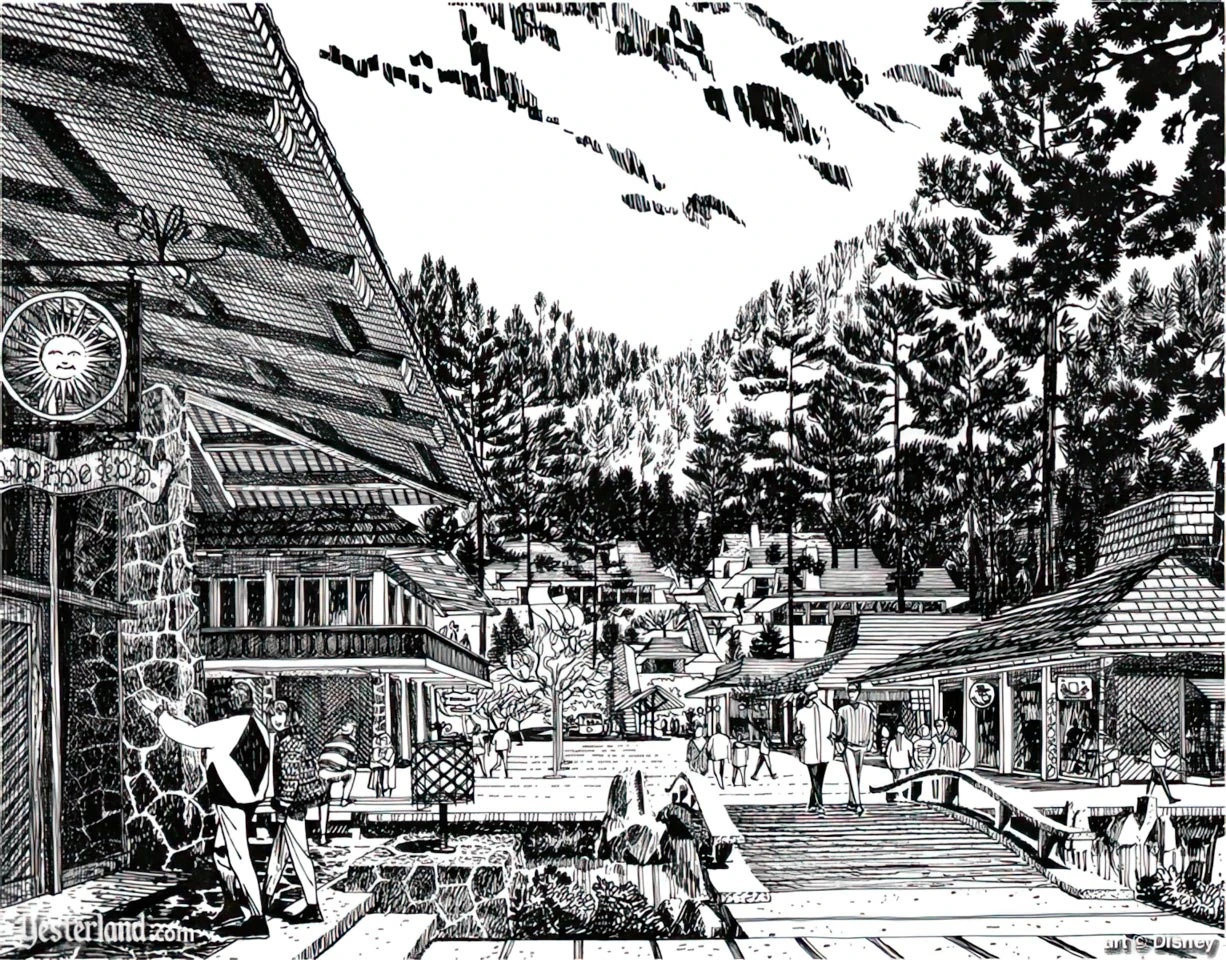
Architecturally, the Village will present an "American-Alpine" style, created by the staff of WED Enterprises, Inc., the Disney design firm responsible for planning the Mineral King project.
"Buildings will be arranged so that each has its own individually-designed setting," said Hicks. "Although structures will appear to be placed in a random formation, their locations will be dictated by natural land contours and appropriate architectural relationships, which will contribute to scenic harmony, general eye appeal, and a logical mix of lodging units, food service facilities, and other accommodations."
In the Village will be hotels, apartments, "family" or group rooms, restaurants, small specialty shops, a conference center and indoor/outdoor recreation units.
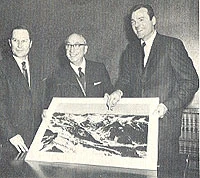
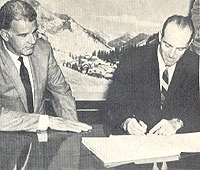
In the first year of operation, 465 guest lodging units accommodating 1,505 persons are planned. Five years later, in fulfillment of the corporation’s commitment under the development proposal, 1,030 units will be available for a total of 3,310 guests. About 90 percent of these units will be in the moderate to medium-price brackets.
 View image +
 View image +
 View image +
Arriving Without the Automobile
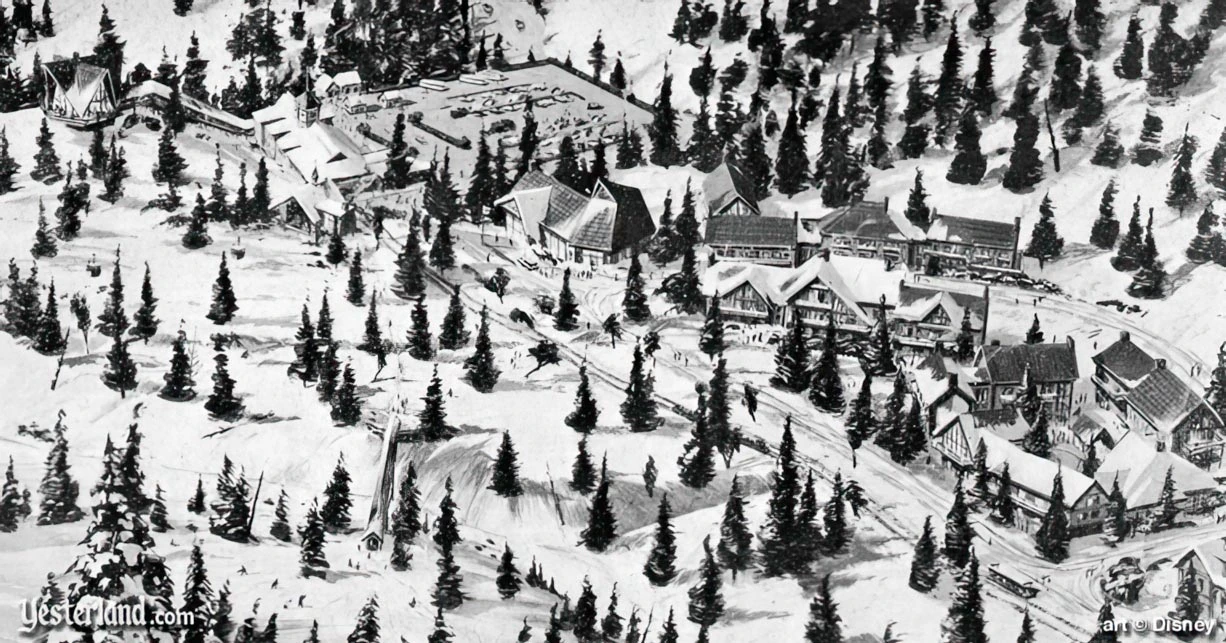
According to Hicks, "An electrically-powered cog-assist rail system is now planned for year-round operation to carry guests between the sub-level automobile reception center and the main village, a mile and a quarter up the valley."
Elimination of noise and pollution, capacity and safety of operation under all weather conditions were factors listed in the choice of this system.
 View image +
Winter in the Mountains
The ski plan calls for first phase development to be concentrated in five bowls, all adjacent to each other and located on north facing slopes, to the south and west of Mineral King Valley.
Initial development is planned so that in Year 1 (Winter, 1973) ten lifts will provide access to three bowls — Mosquito, Eagle and White Chief — which may be skied from the top to the bottom by intermediate skiers.
Mosquito Bowl, one of the largest and longest intermediate ski areas in the United States, offers runs of nearly three miles and a vertical drop from 11,100 feet to 7,400 feet. It will qualify for all-weather skiing, since much of it is timbered or protected by high ridges surrounding the bowl.
By Year 5 (1978), Mineral Bowl and Farewell Canyon will be partly developed, and all five bowls will then be accessible to all skiers. A total of 22 lifts, a combination of chair lifts and gondolas, are planned by the fifth year of operation.
Facilities will accommodate at least 8,000 skiers, and any further development beyond Year 5 will be determined after careful study of operational experience and the aesthetic and ecological limitations of the valley.
"Although skiing will dominate the winter recreation program at Mineral King, a variety of activities has been planned in response to the considerable demand for snow play," continued Hicks. "Several areas will be developed specifically for such snow play activities as sledding, ski-bobbing, riding inner tubes and snow pans, and snow sculpturing. Among other facilities available to the winter visitor will be heated outdoor swimming pools, indoor and outdoor skating rinks, a ski jump amphitheater and trails for use by cross-country skiers, as well as summer hikers."
A Summer Playground
 View image +
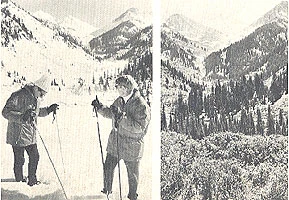
In late spring, Mineral King is transformed into a natural summer playground filled with beautiful mountain glades, limestone caverns, crystal lakes and waterfalls, pine forests and grassy meadows, all of which lend themselves to a summer program of hiking, camping, fishing and other warm weather activities. Twenty lakes are nestled in hanging valleys more than 1,000 feet above the main valley floor.
Hicks, noting that summer visitation is expected to exceed winter sports use, said that, "consistent with its original proposal, the Disney organization has developed an extensive summer recreational program which will be based upon five major activities: fishing, picnicking, hiking, camping and an equestrian center."
"These recreational facilities will be planned and located so that they may be reached by transportation or walking from either the automobile reception center, the main village or the midway terminal of the gondola system."
In conclusion, Hicks stated that the goals of the Disney organization, working with the United States Forest Service will be "to meet the public need by developing an all-year recreational program consistent with the area’s natural beauty."